Blog > How To Choose The Perfect Armchair For Reading (Or Working)
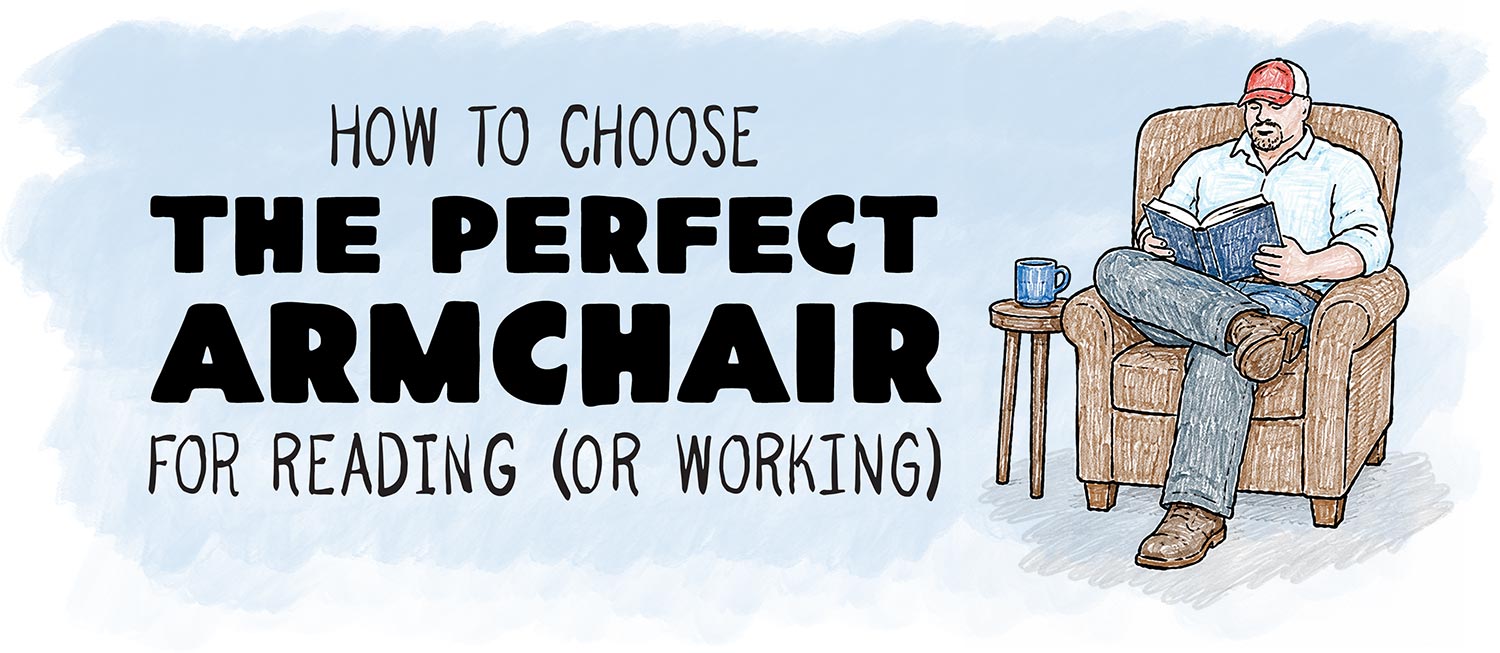
How to buy an armchair for reading/working.
There are a lot of guides out there on finding the right sofa for your home (some of them are okay; many of them are written by shelter magazine interns who know literally nothing about furniture, but that's another topic) but there's not much advice for buying a good armchair.
Here are my starting tips for what makes for a good armchair for reading — and some of them are counterintuitive.
Get a shallower seat.
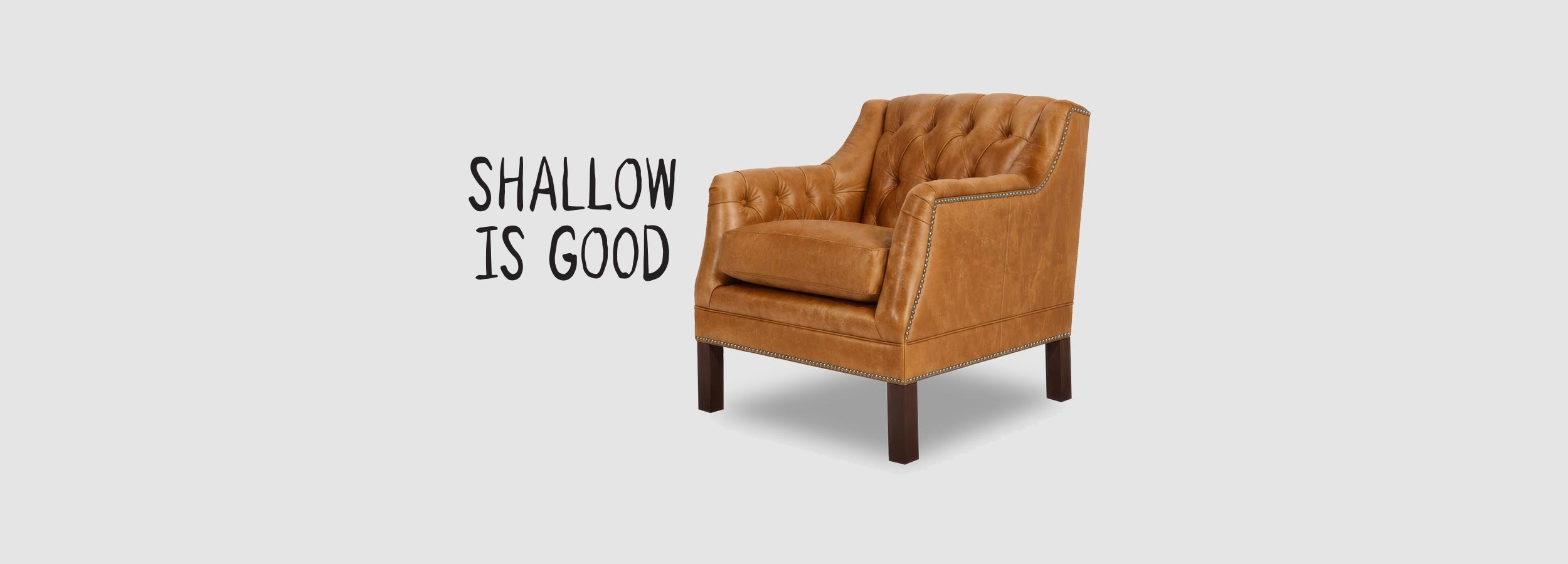
Unlike a sofa, you will be sitting upright in your chair. People often prefer a deep sofa, but a deep armchair may be the wrong choice. You'll want your back to be well-supported, which means a seat depth (for most people) of around 20-22 inches. Seat depth is the distance from the front of the cushion to where it meets the back. If the chair has a loose back cushion, that measurement is with the cushion IN PLACE, not the full depth of the seat cushion which will be longer.
Choose a narrower profile.
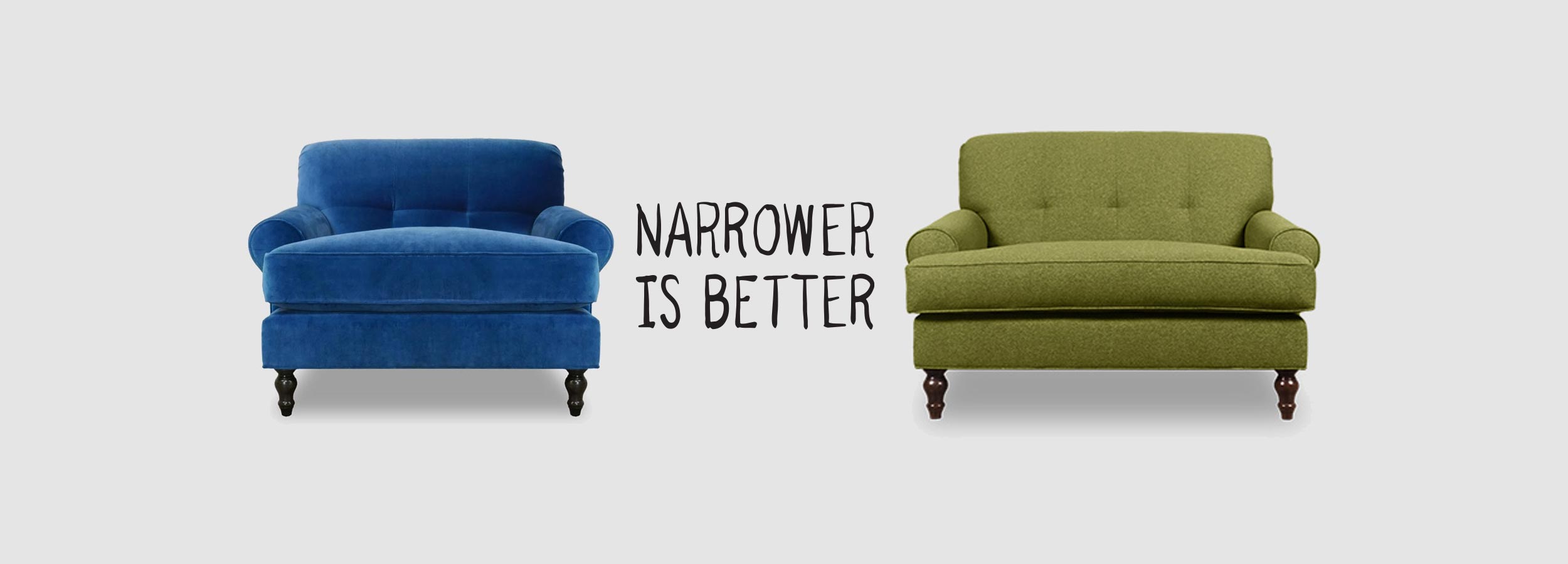
You don't need a ton of width. In fact, that may not be desirable. Chairs-and-a-half go in and out of style, and seem like a good idea, but they're overkill unless you'll be reading with your kids. For comfort, you will want to be able to set your arms on the rests, which means a seat width of 24 inches or less.
Lower armrests are better.
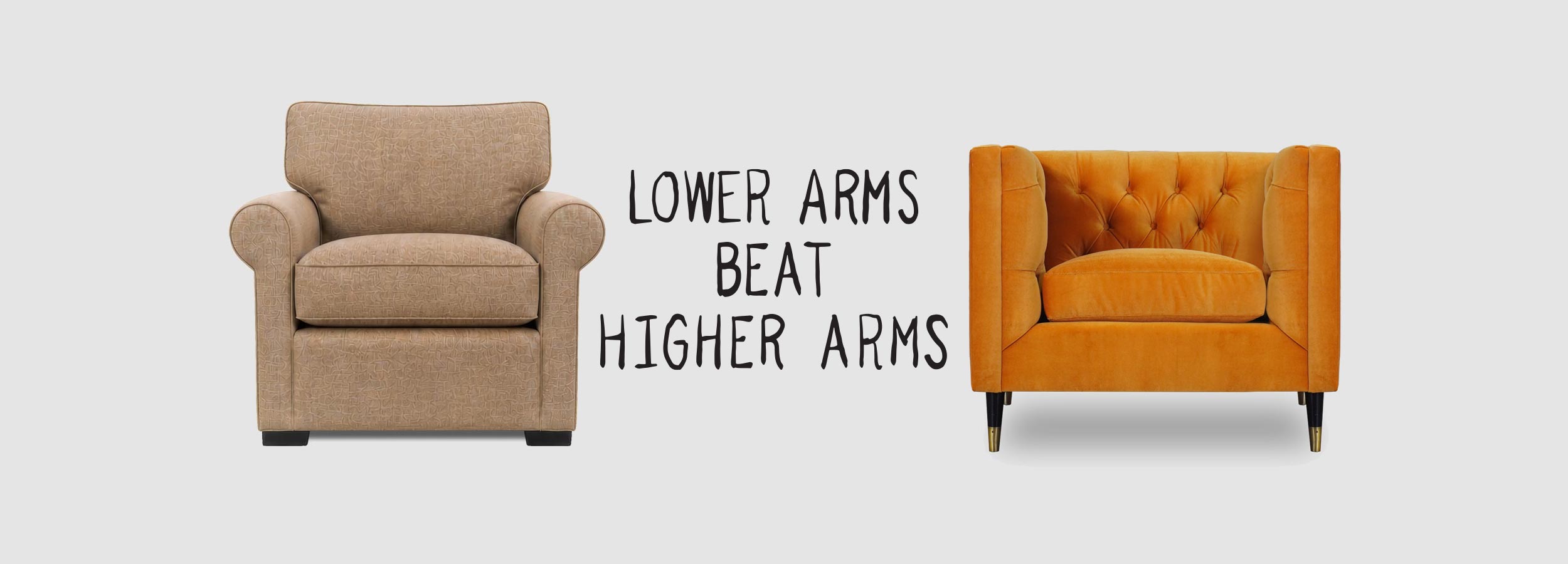
Avoid shelter/high armrests. If you are reading, you will want your arms to fall naturally at your side. While a high-arm piece can look cool, it's probably not best for longer reading sessions. (So that means no Chesterfields, no tuxedo chairs, etc.) Look for an arm height in the 21-24 inch range (assuming a seat height of around 18 inches).
A tight back is preferable.
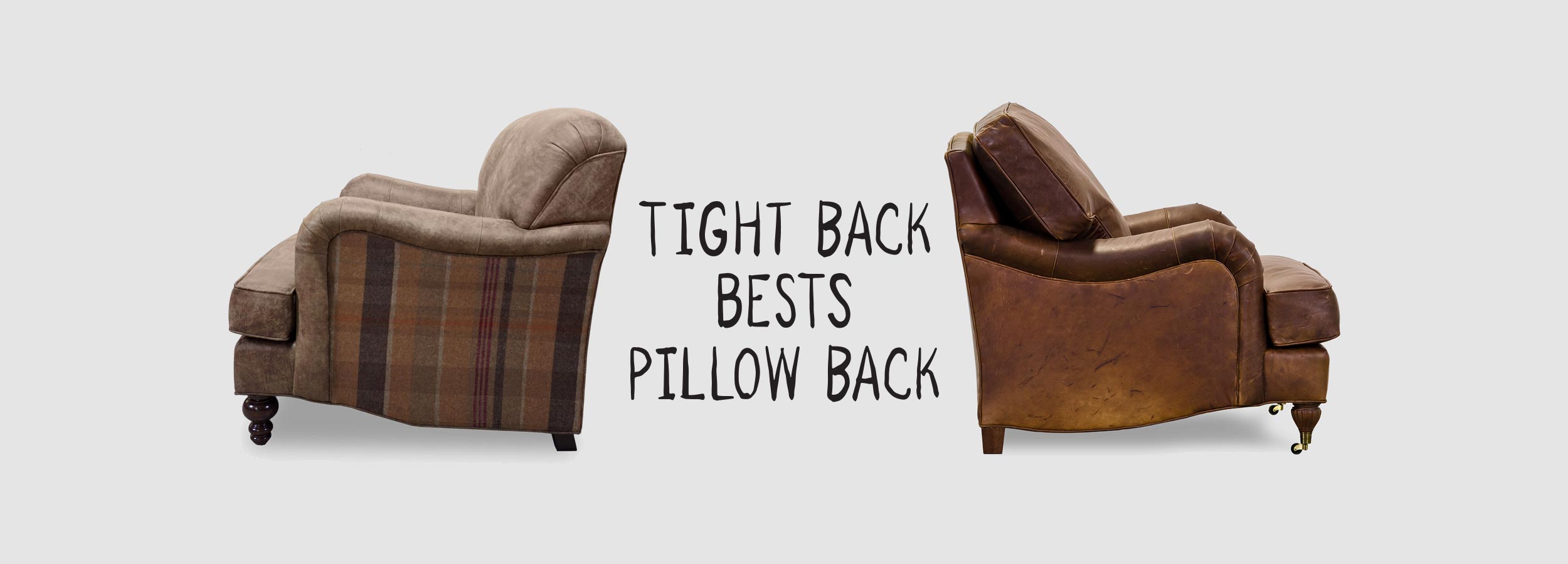
Tight back over pillow back. This is perhaps a controversial take, but I think if your intent is to sit upright for longer periods of time, a tight back chair (where the back has integrated padding versus a loose cushion resting against it) is superior for support. I find that they result in less discomfort over long sitting sessions, particularly if you're like me and have a cranky old lower back.
Add an ottoman.
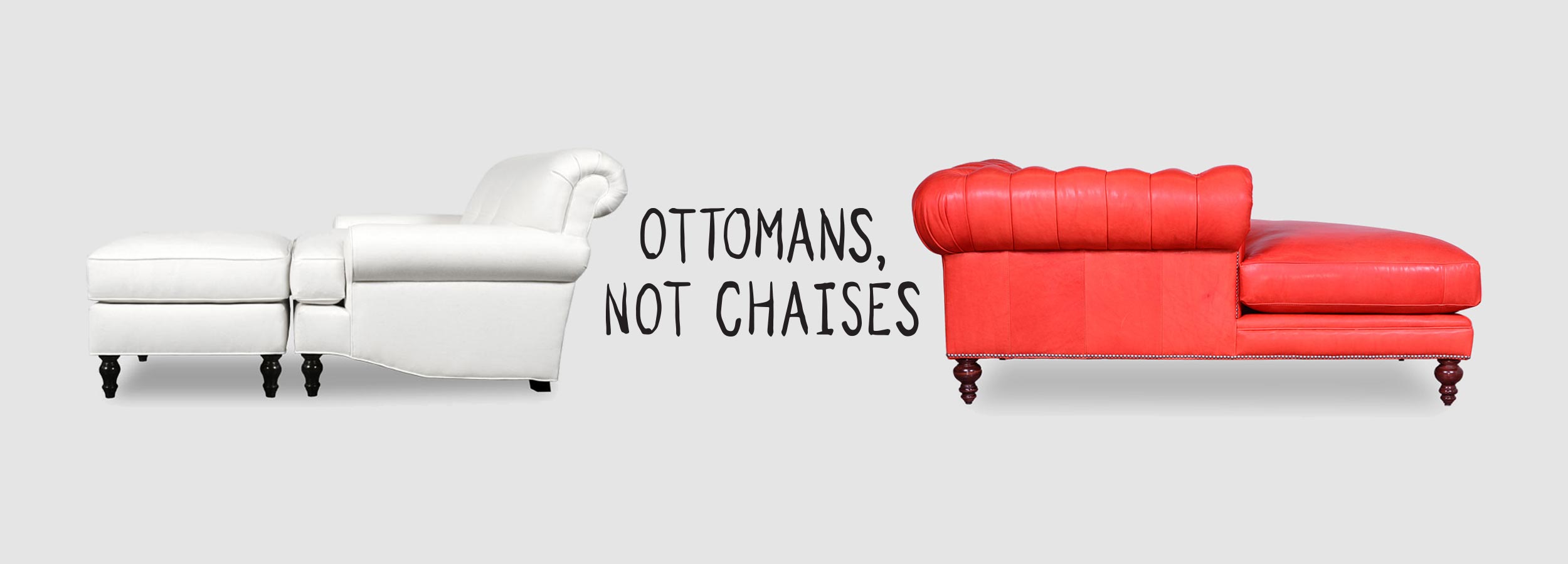
Ottomans are better than chaises. I love a good chaise — they can look amazing and be cozy — but I find that a chair with a matching or complementary ottoman to be more versatile. It serves the same purpose of letting you elevate your feet, but it is OPTIONAL. It can be repositioned to work for people with varying leg lengths, and it can be moved out of the way to make getting in and out of the chair less cumbersome.
The perfect chair may not be huge! My favorite chairs for sitting and reading or working are compact. I'm a big guy — 6'2" and 280lbs — and my favorite chairs from our line for working from home are among our most compact profiles. (Howdy and Ladybird in particular are my favs.) The great thing about this is that these relatively compact pieces are easier to place in a room than something overscale. You might even want a pair of them to add versatility to your seating grouping.

RELATED POSTS
What To Look For In Durable Fabric For Your Luxury Sofa
What's The Best Kind Of Sofa For Little Kids?
How Do We Make Our Seat Cushions?